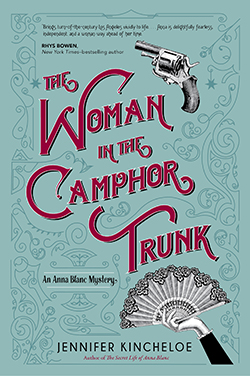
The Woman in the Camphor Trunk

Los Angeles, 1908. In Chinatown, the most dangerous beat in Los Angeles, police matron Anna Blanc and her former sweetheart, Detective Joe Singer, discover the body of a white missionary woman, stuffed in a trunk in the apartment of her Chinese lover.

If news about the murder gets out, there will be a violent backlash against the Chinese. Joe and Anna work to solve the crime quietly and keep the death a secret, reluctantly helped by the good-looking Mr. Jones, a prominent local leader.

Meanwhile, the kidnapping of two slave girls fuels existing tensions, leaving Chinatown poised on the verge of a bloody tong war. Joe orders Anna to stay away, but Anna is determined to solve the crime before news of the murder is leaked and Chinatown explodes.
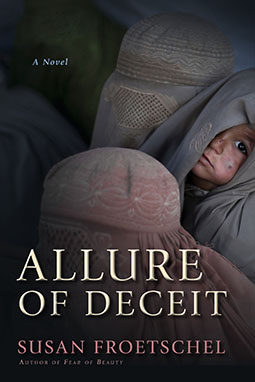

Allure of Deceit

A young inventor and his wife die in a car bombing – leaving behind a will that surprises friends and parents by directing a vast fortune toward charities in the developing world.

On the ground in Afghanistan, international charities rapidly search for Afghan partners to compete for the attention of the new foundation – including an orphanage and a health team supporting reproductive rights. As part of their strategy to win the new funds the two groups try to focus attention on two particular women in the village of Laashekoh: a young mother imprisoned for murdering the village leader’s oldest son and a woman who has a reputation for providing reproductive health care, including abortions. When they discover that the first woman abandoned her infant daughter, and the second has no actual patients, aid workers and lawyers scramble to enhance the stories.

Meanwhile, most Laashekoh villagers do not want Western charity and are astounded to be regarded as potential recipients. Then a group of orphanage workers visiting the village goes missing, and foul play is immediately suspected.

The stakes are high, the sums of money are huge, and cultures clash. All these are motivations for fraud and murder in Allure of Deceit.


Written in Blood

Detective Joe “Preach” Everson, a prison chaplain turned police officer, is coming home.

After a decade tracking down killers in Atlanta, and with a reputation as one of the finest homicide detectives in the city, his career derailed when he suffered a mental breakdown during the investigation of a serial killer who was targeting children.

No sooner does Preach arrive at home in Creekville, North Carolina—a bohemian community near Chapel Hill—than a local bookstore owner is brutally killed, the first murder in a decade. The only officer with homicide experience, Preach is assigned to the case and makes a shocking discovery: the bookstore owner has been murdered in exactly the same manner as the pawnbroker in Dostoevsky’s Crime and Punishment.

With the help of Ariana Hale, a law student and bibliophile who knew the victim, Preach investigates the local writer’s community. As their questions increase, a second body is found, this time eerily resembling the crime scene in a famous Edgar Allan Poe novella. Preach and Ariana realize that their adversary is an intelligent, literate killer with a mind as devious as it is disturbed. And one or both of them may be his next target.


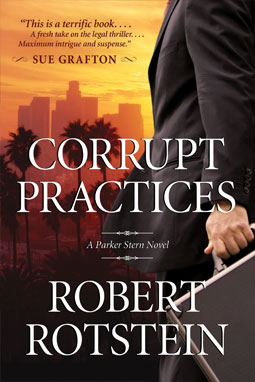
Corrupt Practices

An attorney with courtroom stage fright must uncover the truth . . . and confront his own long-buried secrets.

Parker Stern’s legal career is on the rise. But when his mentor Harmon Cherry commits suicide, Parker begins experiencing stage fright so severe that he becomes paralyzed whenever he steps into a courtroom. Unable to work, he languishes at a coffee house that is owned by his former law partner (and occasional lover) Deanna Poulos.

His down time is interrupted when Rich Baxter, another ex-colleague, calls from jail and asks Parker to represent him. Baxter has been charged with embezzling millions from his church, a powerful cult that Parker despises. At their first meeting, Baxter surprises Parker by claiming that Harmon Cherry did not commit suicide, but was murdered by someone connected to the church. Parker doesn’t believe it until Baxter is found hanging in his cell.

Ultimately, Parker agrees to represent Baxter’s father in a lawsuit brought by the church. In the process of representing his client and uncovering the truths behind the deaths of his friends, Parker must overcome his own long-buried secrets and deep-seated fears.


Dante’s Wood

A troubled psychiatrist turns investigator when a young patient confesses to murder.

Psychiatrist Mark Angelotti knows that genes don’t lie. Or do they?

Back at work after a devastating illness, Mark believes he has put his past behind him when he is asked to examine Charlie Dickerson, a mentally handicapped teenager whose wealthy mother insists he is a victim of sexual abuse. Mark diagnoses a different reason for Charlie’s ills, but his prescription turns deadly when a teacher is murdered and Charlie confesses to the police.

Volunteering to testify on Charlie’s behalf, Mark’s worst fears are realized when paternity tests show the victim was pregnant with Charlie’s child. Now it’s up to Mark to prove Charlie’s innocence in a case where nothing is as first meets the eye.

Not even genes—Mark’s or Charlie’s—can be trusted to shine a light on the truth.


Styx & Stone

Ellie Stone is a professed modern girl in 1960s’ New York City, playing by her own rules and breaking boundaries while searching for a killer among the renowned scholars in Columbia University’s Italian Department.

“If you were a man, you’d make a good detective.”

Ellie Stone is sure that Sgt. McKeever meant that as a compliment, but that identity-a girl wanting to do a man’s job-has throttled her for too long. It’s 1960, and Ellie doesn’t want to blaze any trails for women; she just wants to be a reporter, one who doesn’t need to swat hands off her behind at every turn.

Adrift in her career, Ellie is back in New York City after receiving news that her estranged father, a renowned Dante scholar and distinguished professor, is near death after a savage bludgeoning in his home. The police suspect a routine burglary, but Ellie has her doubts. When a second attempt is made on her father’s life, in the form of an “accident” in the hospital’s ICU, Ellie’s suspicions are confirmed.

Then another professor turns up dead, and Ellie’s investigation turns to her father’s university colleagues, their ambitions, jealousies, and secret lives. Ellie embarks on a thorny journey of discovery and reconciliation, as she pursues an investigation that offers her both a chance at redemption in her father’s eyes, and the risk of losing him forever.


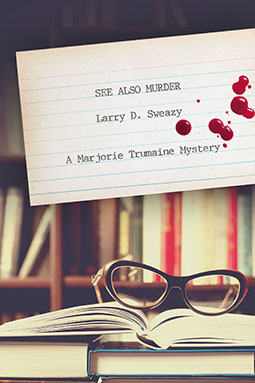
See Also Murder

In 1964, a grisly murder is committed in the small town of Dickinson, North Dakota.

Erik and Lida Knudsen are found murdered in their bed, their throats slit. Two grown sons-Jaeger and Peter-live in the same house, but claim to have heard nothing while asleep in their rooms. 

Sheriff Hilo Jenkins is called to the scene and discovers a strange copper amulet clasped in Erik’s hand. Knowing that his friend Marjorie Trumaine is a skilled researcher and professional indexer, Jenkins asks for her help in investigating the possible meaning of the amulet with its unusual markings.

As she gets closer to the truth, Marjorie feels increasingly threatened, knowing the killer will stop at nothing to cover his tracks.

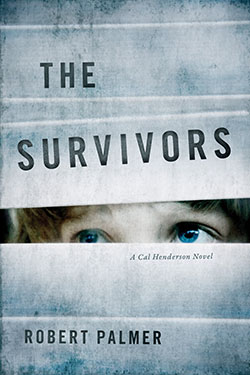
The Survivors

Successful psychologist Cal Henderson has a busy practice in Washington, DC, good friends, and big plans for the future. But he can’t escape a terrible secret.

When he was a boy, his mother murdered his father and two brothers and severely wounded Cal’s best friend, Scottie Glass. Desperate to keep the nightmare at bay, Cal has turned his back on everything that happened that night.

Then on the twenty-fifth anniversary of the traumatic event, Scottie shows up at Cal’s office—edgy, paranoid, but somehow still the loveable kid he once was. Though their lives have taken very different paths, they both believe Cal’s mother couldn’t have been a murderer. She loved them too much, no matter what dark place she found herself in. They set off to dig up the real story.

In his search for answers he uncovers secrets about his mother’s life involving a defense contractor’s dark dealings, a nominee for U.S. Attorney with a questionable past, and a shady corporate billionaire whose sphere of influence seems to include everyone from the Pentagon on down.

Meanwhile, as Cal gets closer to discovering the truth, recovered memories of his childhood push him into a psychological tailspin.


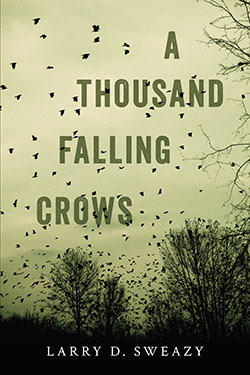
A Thousand Falling Crows


Sonny Burton was forced to retire from the Texas Rangers after taking a bullet from Bonnie Parker in a shoot-out. The bullet so damaged Sonny’s right arm that he had to have it amputated.

While Sonny struggles with recuperating and tries to get used to the idea of living a life with only one arm, Aldo Hernandez, the hospital’s janitor, asks Sonny to help find his daughter and bring her back home. She has got herself mixed up with a couple of brothers involved in a string of robberies. Sonny agrees to help, but is more concerned about a wholly different criminal in town who has taken to killing young women and leaving them in local fields for crows to feast on.

Just as Sonny is able to track down Aldo’s daughter, he comes to an uncomfortable realization about who might be responsible for the string of murders and races to nab the killer before another girl is left to the crows.


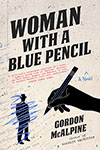
Woman With a Blue Pencil

What becomes of a character cut from a writer’s working manuscript? 

On the eve of Pearl Harbor, Sam Sumida, a Japanese-American academic, has been thrust into the role of amateur P.I., investigating his wife’s murder, which has been largely ignored by the LAPD. Grief stricken by her loss, disoriented by his ill-prepared change of occupation, the worst is yet to come, Sam discovers that, inexplicably, he has become not only unrecognizable to his former acquaintances but that all signs of his existence (including even the murder he’s investigating) have been erased. Unaware that he is a discarded, fictional creation, he resumes his investigation in a world now characterized not only by his own sense of isolation but by wartime fear.

Meantime, Sam’s story is interspersed with chapters from a pulp spy novel that features an L.A.-based Korean P.I. with jingoistic and anti-Japanese, post December 7th attitudes – the revised, politically and commercially viable character for whom Sumida has been excised.

Behind it all is the ambitious, 20-year-old Nisei author who has made the changes, despite the relocation of himself and his family to a Japanese internment camp. And, looming above, is his book editor in New York, who serves as both muse and manipulator to the young author—the woman with the blue pencil, a new kind offemme fatale.